
Article: Shock Loss After a Hair Transplant: What Is Normal?
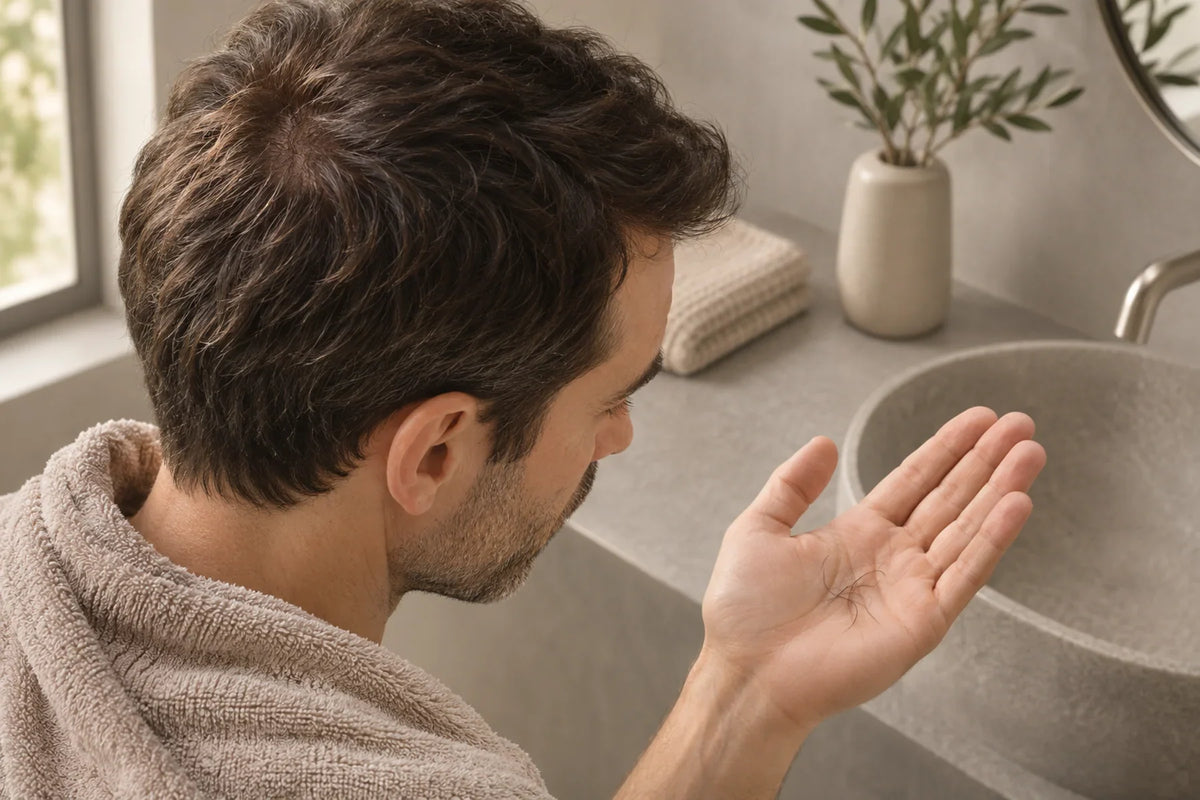
Shock Loss After a Hair Transplant: What Is Normal?
Seeing more hair in the shower a few weeks after a hair transplant can be unsettling.
In short: A few weeks after a hair transplant, the visible transplanted hairs often fall out before new growth starts. Shock loss is different: it usually means temporary shedding of hair that was already there before surgery. Neither, on its own, means the transplant has failed. If you notice severe pain, worsening redness or other unexpected symptoms, contact your transplant clinic promptly. [1, 2]
Why can hair look thinner after a transplant?
The transplanted hairs are shedding. The visible hairs can fall out in the first few weeks while the transplanted follicles remain in the scalp. The area can look thinner before new hair becomes visible. [1]
Your existing hair is shedding. Shock loss usually means shedding of non-transplanted hair in or around the area where grafts were placed. Similar shedding can also happen in the donor area. It may look patchy or more spread out, and it can be hard to distinguish from other changes without an examination. [2, 3]
The hair around the transplant is still thinning. A transplant moves follicles. It does not stop the underlying process that can cause surrounding hair to become progressively finer. If the area keeps thinning, ask your clinic whether ongoing hair loss could be part of the picture. [1]
How long does shock loss last?
Shock loss can become noticeable in the weeks after surgery. In many cases, the affected hair grows back over the following months, but there is no fixed date by which it should happen. The timeline for your existing hair is also not necessarily the same as the timeline for growth from the transplanted follicles. [1, 2]
If you’re unsure what is changing, take a photo of the area in consistent lighting and share it with your clinic. Note when the shedding started, whether it is in the recipient or donor area, and whether you have any other symptoms. That gives the clinic more to work with than a daily hair count.
When should you contact your transplant clinic?
Contact your clinic promptly if you have severe or increasing pain, spreading redness, pus, fever, or another unexpected symptom. If a patch keeps getting larger or the thinning continues beyond what your clinic told you to expect, ask for a follow-up. Don’t assume that every new area of thinning is shock loss. [1, 2, 3]
Where does a scalp serum fit in?
During recovery, follow the aftercare plan from your clinic. Wait until your scalp has fully healed and your clinic has cleared leave-on products before starting a cosmetic serum. Using one sooner is not a shortcut to regrowth.
If your scalp has healed and you’re looking for a lightweight, fragrance-free option for daily scalp care, WELAB BIOTECH Advanced Multi-Peptide Scalp Serum is a cosmetic leave-on formula. Our guide to using a scalp serum after a hair transplant explains when a serum can fit into your routine and how to use it.
Frequently asked questions
Is shedding a few weeks after a hair transplant normal?
Visible transplanted hairs commonly shed in the weeks after surgery, before new hair becomes visible. Shock loss, by contrast, affects hair that was already there. If you cannot tell which you are seeing, ask your clinic rather than trying to diagnose it at home. [1, 2]
Does hair grow back after shock loss?
It often does, but the timing and degree of recovery vary. If the thinning persists or worsens, your clinic can assess whether something else is contributing. [1, 2]
Can shock loss happen in the donor area?
Yes. Shedding can occur in the area where follicles were taken, often at the back of the scalp. If you notice a new patch there, send your clinic a photo and ask whether it needs an examination. [3]
Can a scalp serum stop shock loss?
A cosmetic scalp serum is not a treatment for shock loss. While your scalp is healing, use only the products your clinic recommends. Once the scalp is fully healed and your clinic has cleared leave-on cosmetics, you can consider a serum for daily scalp care.
About the author
Alena Weissenbaeck is the founder of WELAB BIOTECH and a certified Hair Practitioner through the International Association of Trichologists. WELAB BIOTECH makes the serum mentioned in this article.
This article is for general information. It does not replace advice from your surgeon or transplant clinic.



Leave a comment
This site is protected by hCaptcha and the hCaptcha Privacy Policy and Terms of Service apply.